
Solar Eclipse 2026
The light show failed to dazzle but it was so much more than that

For complete access to all content subscribe to Legalise Freedom HERE from as little as £3.33 a month.
The recent solar eclipse of August 12th 2026 took place two days before my birthday. I was on holiday in the foothills of the Pennines. Our rural location afforded unrestricted views of the sky which was almost completely free of clouds. Although in general I’m averse to, sometimes even repulsed by, mass events – especially those played out in the media – as a lifelong astronomy enthusiast, I have always taken the opportunity to witness any rare and dramatic cosmic happenings. I still recall climbing onto the roof of our garden shed to view the lunar eclipse on July 6th 1982 through my grandfather’s WWII binoculars. It was the longest total lunar eclipse of the entire 20th century.
As many have already noted, this latest solar eclipse was – depending on how you look at it, literally and figuratively – something of a damp squib. Most amateur observers registered little more than a slight dimming in the sun’s intensity. There are lots of dramatic images of the eclipse available online, but as is the norm now, it’s almost impossible to tell the unfiltered from the heavily doctored. In any event, millions queued to buy their special eclipse glasses like so many buckets of popcorn in a cinema foyer.
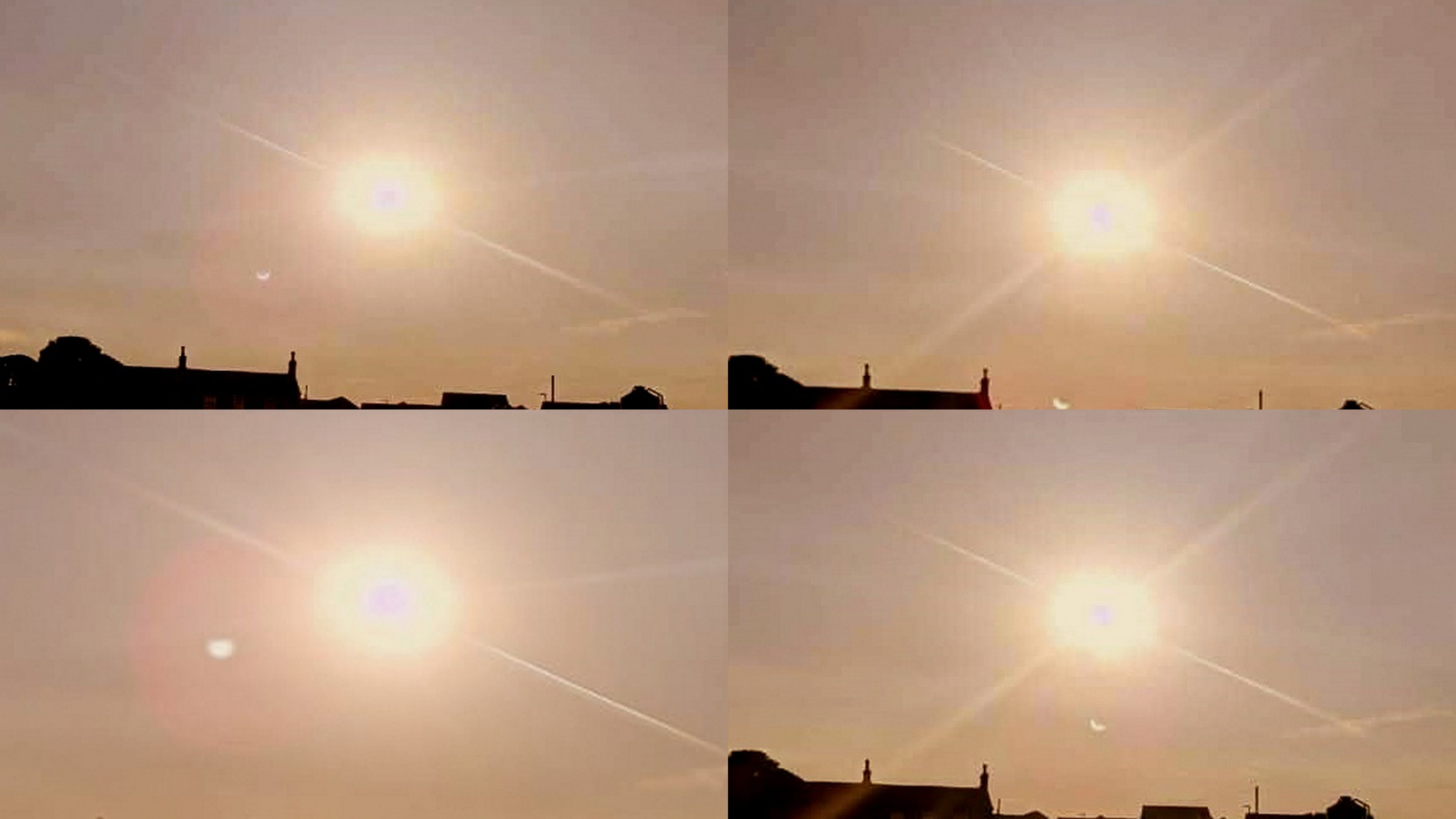
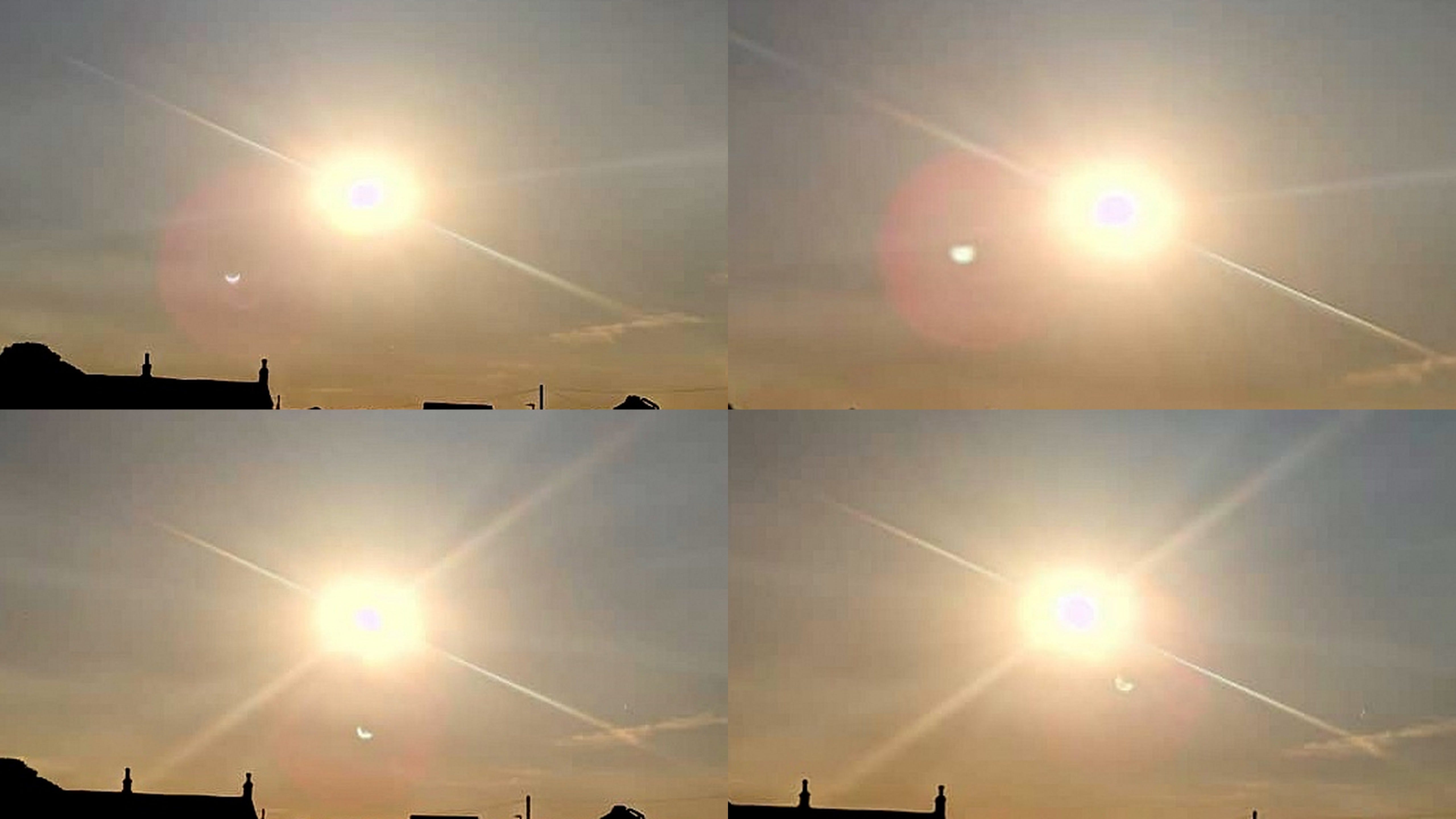
Below are some photos from our vantage point near Holmfirth, West Yorkshire. Each set of four images was taken by a different camera. As far as I can tell, the secondary objects seen in both sets are probably lens flare, although at least one image appears to show the encroaching moon. I would value your opinions on what we’re looking at here.
For my part the eclipse was a quietly profound moment. When I contemplate the ineffable nature of the planets and the stars, the impossible vastness of the Universe, and the boundless magic and mystery of existence itself, worldly trivialities simply melt away. I am reminded yet again that we are all part of something much, much bigger, and that we would do well – individually and collectively – to live and die accordingly.
As the moon gradually made her way across the face of the sun, the first change I observed was the quality of the light; it became dimmer – obviously – but also altered in a way I can’t quite articulate. It was getting darker, but not in the usual way. It was not unlike the solar / lunar activity on other planets as described in science fiction. And the birds did indeed stop singing for a few minutes. Their instinctive, intuitive connection to Earth energies and planetary forces is a stark reminder of our own species’ catastrophic disconnect.
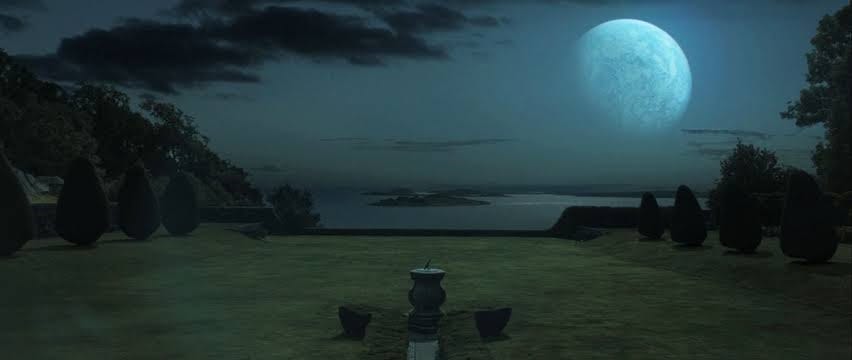
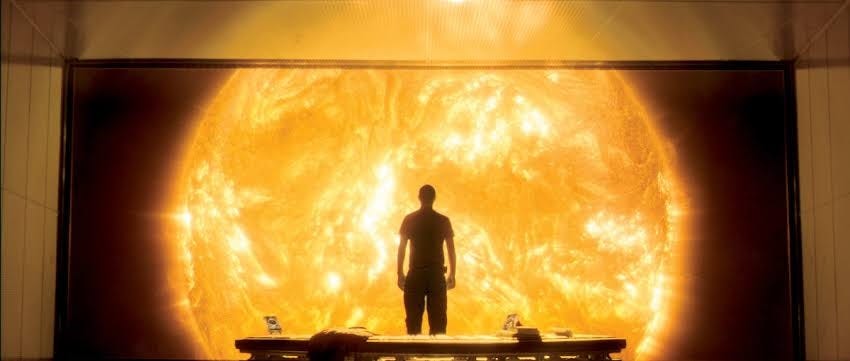
As fleeting as it was, the experience brought a wave of thoughts and emotions. I was reminded of both the awesome creative and destructive power of the heavenly bodies: Lars von Trier’s 2011 film Melancholia, in which humdrum human psychodrama plays out against a backdrop of a rogue planet rapidly approaching Earth to swiftly end all life. Danny Boyle’s 2007 movie Sunshine, set in 2057 as a global freeze threatens human extinction. The film follows the crew of a spacecraft on a mission to deliver a stellar bomb intended to reignite the dying Sun.
Ultimately, those precious few moments of cosmic change, on a scale almost unimaginable to the human intellect, present a challenge and an opportunity. The next total solar eclipse in my corner of the world will be on September 23rd 2090.
For complete access to all content subscribe to Legalise Freedom HERE from as little as £3.33 a month.